
- Home
- Shop for Onboard & Afloat Solutions
- Superyacht Deck Equipment
- Boarding Equipment
- Inflatable Docks & Platforms
- Yacht Water Toys
- Motor Cruiser Deck Equipment
- Contact
Tender Mooring Whip Guide

Overview
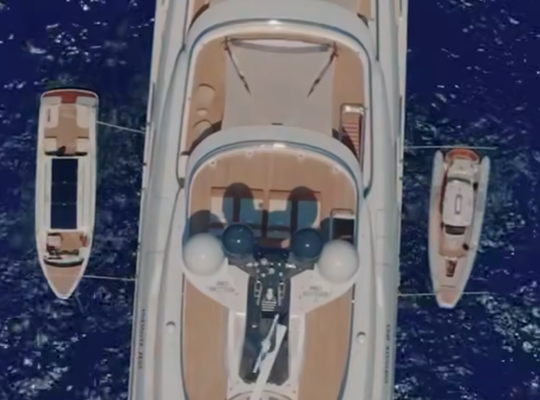
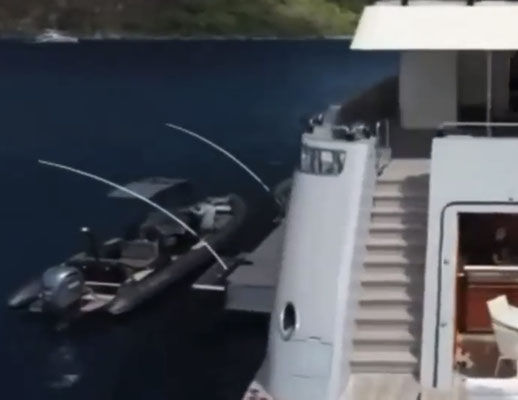
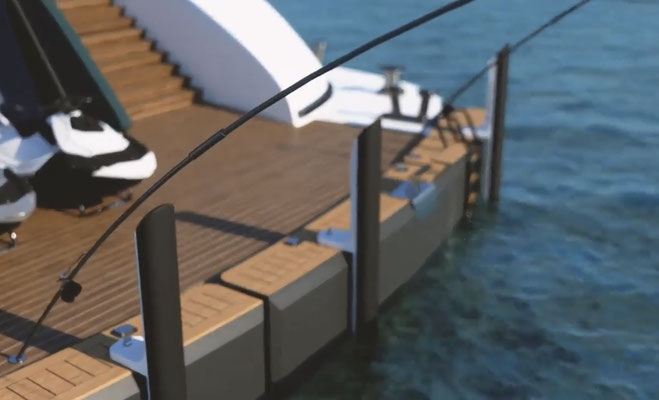
The mooring whip bases should be located opposite the attachment point on the tender/Jetski. Ideally at opposite ends of the Tender / Jetski (i.e. bow and stern).
The further apart the attachment points are, the better. It is advisable for the poles to be pointing towards the Tender / Jetski at 90 degrees.
NOTE: Whips are not designed to be used in conditions above a Force 4 or heavy swell, damage occurred during use in these conditions will not be covered by warranty.

How to Choose the Right Mooring Whips?
Choose your whips according to the weight & LOA of the tender
Weight: Up to 4000kg
Tender Size: up to 5.0m
Weight: Up to 7000kg
Tender Size: under 10m
Weight: 7000 - 12,000kg
Tender Size: Up to 12m LOA
Note: It is recommended to have a minimum spacing of 1.8m between the Yacht & the Tender.
Frequently Asked Questions
Useful answers for superyacht crew, yacht owners and marine operators choosing GRP or carbon mooring whips for jetskis, tenders and chase boats.
What are jetski and tender mooring whips used for?
They help reduce movement caused by waves, wash and currents, helping to minimise the risk of contact damage between the tender and the mothership.
What size is the base end of the mooring whip poles?
If you already have whip mounts fitted onboard, measure the internal diameter of your mounts before ordering to check compatibility.
What if our existing whip mounts are too small?
Socket adapters allow the mooring whips to be used with certain existing onboard mount arrangements, helping avoid the need to fully replace the current setup.
What if our existing whip mounts are too large?
For carbon mooring whips, extra layers may also be added to the base end as a customisation option. Contact the team with your mount measurements to check the best solution.
What type of mooring whip lines are included?
Polyester is chosen because it can withstand a high level of friction, offers strong UV resistance and retains strength when wet, making it well suited to marine use.
Can the mooring whip poles be custom painted?
Gloss and semi-gloss finishes are generally not recommended, as the finish can dull over time through cleaning and regular use.
What is included in a mooring whip kit?
• 2 x mooring whip poles, depending on selected size
• 2 x stainless steel flush mounts
• Whip pole storage bag
Depending on the product option, kits may be available in GRP or carbon versions.
What mooring whip mount options are available?
• Stainless steel flush mounts
• Stanchion mounts
• Mooring whip socket adapters
The best option depends on whether you are fitting a new installation or adapting existing onboard mounts.
What makes these mooring whips different?
Stainless steel ferrules are fitted at the line entry and exit points, giving a cleaner finish and helping reduce chafe on the whip lines for improved longevity.
Are GRP mooring whips suitable for jetskis and tenders?
They are a practical choice for superyachts, motor yachts and docks where the tender or jetski needs to be held securely away from the vessel.
When should we choose carbon mooring whips?
They are a strong, premium option where greater length, strength and performance are required for heavier tender setups.
How should mooring whips be used correctly?
Important: the whip pole tip should never be lower than the base.
How to set up mooring whips:
• Insert the whip poles into the mounts
• Align the tender or jetski with the mounts / bases
• Loosely attach the bow, stern and spring lines from the tender to the yacht, or vice versa, approximately 2m away from the yacht, dock or gunwale
• Attach the whip lines to the tender cleats
• Tension the whip lines to create a bend in the poles
• Secure the bow, stern and spring lines to prevent the poles bending sideways
The aim is to keep the tender or jetski perpendicular, at approximately 90º, to the poles and attachment points at all times.
The breast and spring lines should be set to hold the tender or jetski a minimum of 1.8m to 2m away from the yacht, dock or gunwale.
Top tip: it can be useful to attach a snap shackle or trigger snap shackle to the end of the mooring whip line. This can help the whip lines hang vertically from the whip tip instead of blowing around in the wind, and can also allow very quick attachment to the tender when combined with a loop.
Safety warning: a flailing line with a metal shackle attached can be a hazard for crew, tender and yacht, so always secure lines safely and check the setup before use.
Can mooring whips be used in any weather?
Damage caused during use in these conditions will not be covered by warranty.
Is there warranty on the mooring whips?
Can you help us choose the right mooring whips?
For the best recommendation, provide your tender or jetski length, approximate weight, cleat positions and details of any existing mooring whip mounts.
Need help choosing the correct mooring whips?
Send your tender size, weight and onboard setup, and the team can recommend the most suitable GRP or carbon mooring whip kit.
Contact UsHow to Use Mooring Whips?
▼ How much “bend” should a mooring whip have when in use?
Do not be afraid to bend the whip poles. The more bend in the pole the more resistance you will get between the Yacht and Tender / Jetski, however do prevent “over-bending” which will damage the whip pole. The whip pole tip should never be lower than the base.
▼ How to set up mooring whips?
Option 1
When the tender does not have a midship cleat

Option 2
When the tender has a midship cleat

- Insert the whip poles into the mounts.
- Align the tender with the mounts / bases.
- Loosely attach the bow & stern + spring lines from the tender to yacht, or vice versa, approx 2m away from the yacht / dock / gunwale. This will assist with keeping the tender in a relatively stationary position whilst attaching the whip lines.
- Attach the whip lines to the tender cleats.
- Tension the whip lines to create a bend in the poles.
- Secure the bow, stern & spring lines to prevent the poles bending sideways. The aim is to keep the tender perpendicular, 90º, to the poles / attachment points at all times. The breast and spring lines should be at a length that holds the tender / jetski a minimum of 1.8 - 2 metres away from the yacht / dock / gunwale.
Top Tip:
It can be useful to attach a snap shackle / trigger snap shackle to the end of the mooring whip line, this can be beneficial:
- so the whip lines hang vertically from the whip tip rather than blowing around in the wind
- super quick whip line attachment to the tender when combined with a loop
SAFETY WARNING: It may seem obvious but a flailing line with a chunk of metal hanging off the end could be a hazard for both crew, tender & yacht!
Advice:
Where possible, attach the lines to the tender lifting eyes as these will likely be stronger attachment points than the cleats.
How to Install Tender Mooring Whips?
▼ What is a “correct” whip angle?
The whip bases we supply all have pre-determined angles i.e. flush base 51º thus ensuring the angle of the whip is correct, assuming the mount is fitted onto / into the deck.

▼ Where should I position the mooring whips?
Locate your whip base in line with the cleat on your tender. The further the attachment points are, the better. The poles should be perpendicular, 90º, to the Yacht and Tender. The whip pole tip should never be lower than the base / mount fitting.
▼ Can I bond the two whip pole pieces together?
Whips arrive in two halves, which can, if required, be bonded together. However, it is common to leave these loose to enable easy storage.
If you decide you want to permanently bond your whip pole pieces together we would suggest using epoxy adhesive such as Isobond from Silcomin, Sparbond from Gurit or a methulacrylate like an SAF or Plexus. It is important to align the end of the whip and the cleat when assembling.
▼ Where to mount the mooring whip bases?
Each mooring whip base or mount should be located in line with the cleat on the tender. The further apart the attachment points are, the better. The poles should be perpendicular, at 90º, to the yacht and tender.
What Maintenance is Required for Mooring Whips?
▼ What cleaning needs to be carried out?
- Rinse off salt remnants.
- Rinse & wash pole with mild boat cleaner / soap.
- PXR cam cleat - wash down with fresh water to remove salt build up & remove rope debris.
▼ What inspections need to be carried out prior to Mooring Whip use?
- Ensure all components are secure & in good order.
- Check for any signs of wear & tear i.e. cracks on the poles.
▼ How to maintain the PXR Cam Cleat on the mooring whip?
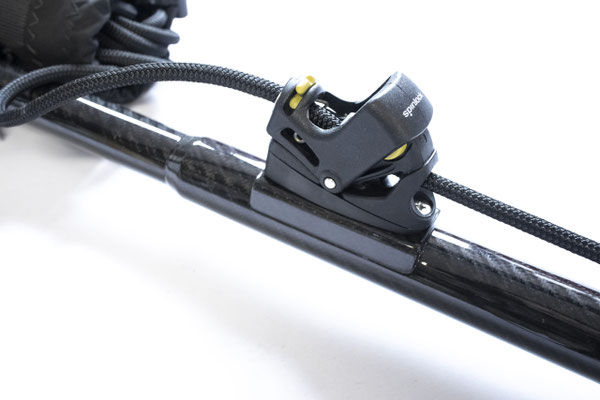
- Always wash down with fresh water to remove salt build up.
- Remove rope debris.
- Check functionality.
- Inspect for wear.
- Avoid lubricants.
- Check fasteners.
▼ The mooring whip line slips, what can I do about it?
Check the spring release setting, if required change it to a higher setting:
1 = High
2 = Medium
3 = Light
Setting 2 / Medium is most likely the best general use for a mooring whip set up.
▼ How to adjust the PXR Cam Cleat?
The Spinlock PXR cam cleat features a three-stage spring release adjustment. You can easily adjust the tension by changing the release setting on the top of the cleat using a flat-head screwdriver. Setting 2 / Medium is most likely the best for use on a mooring whip set up.